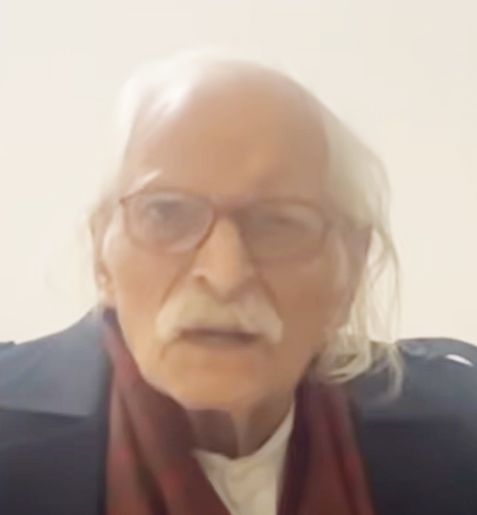
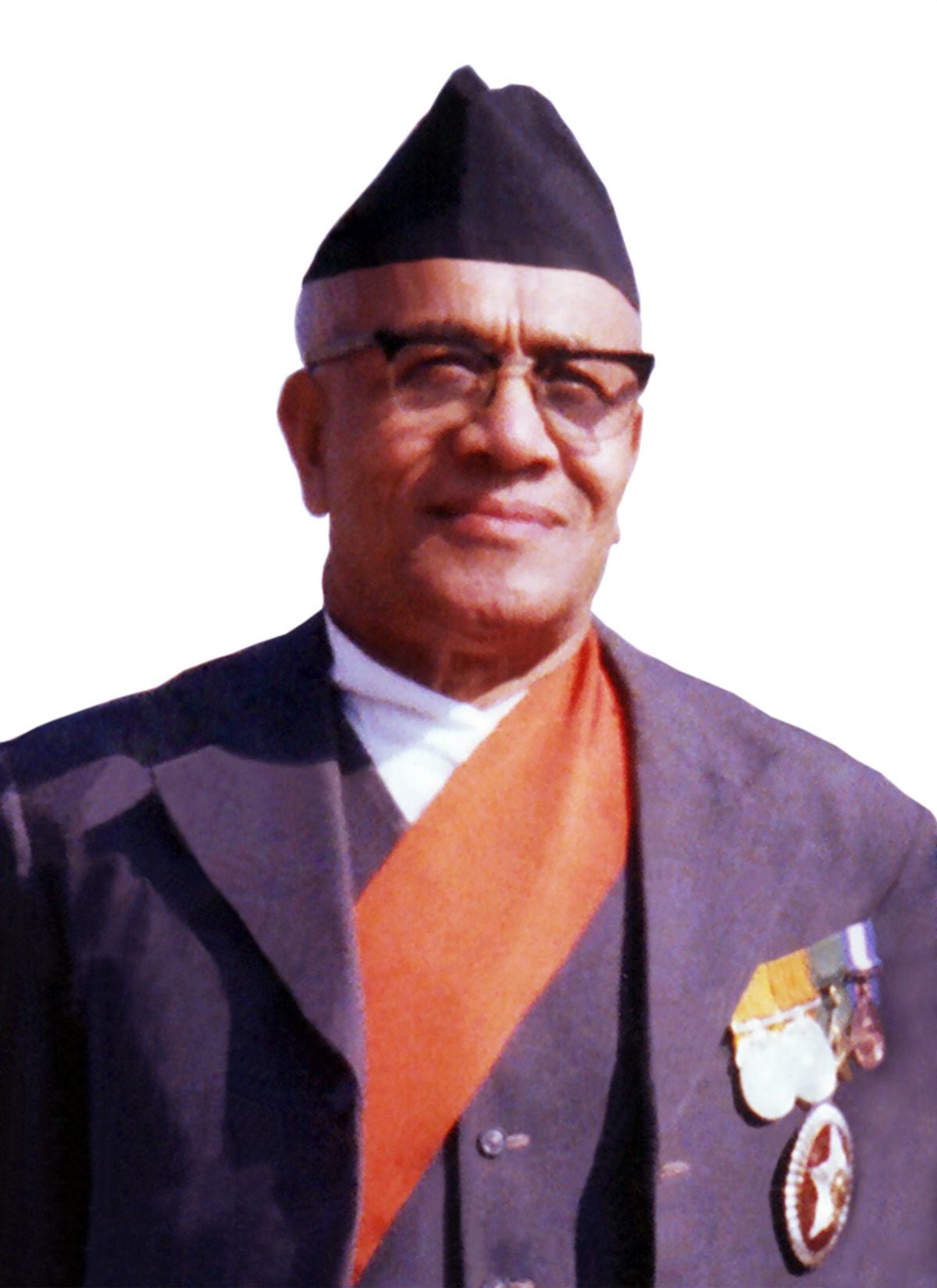
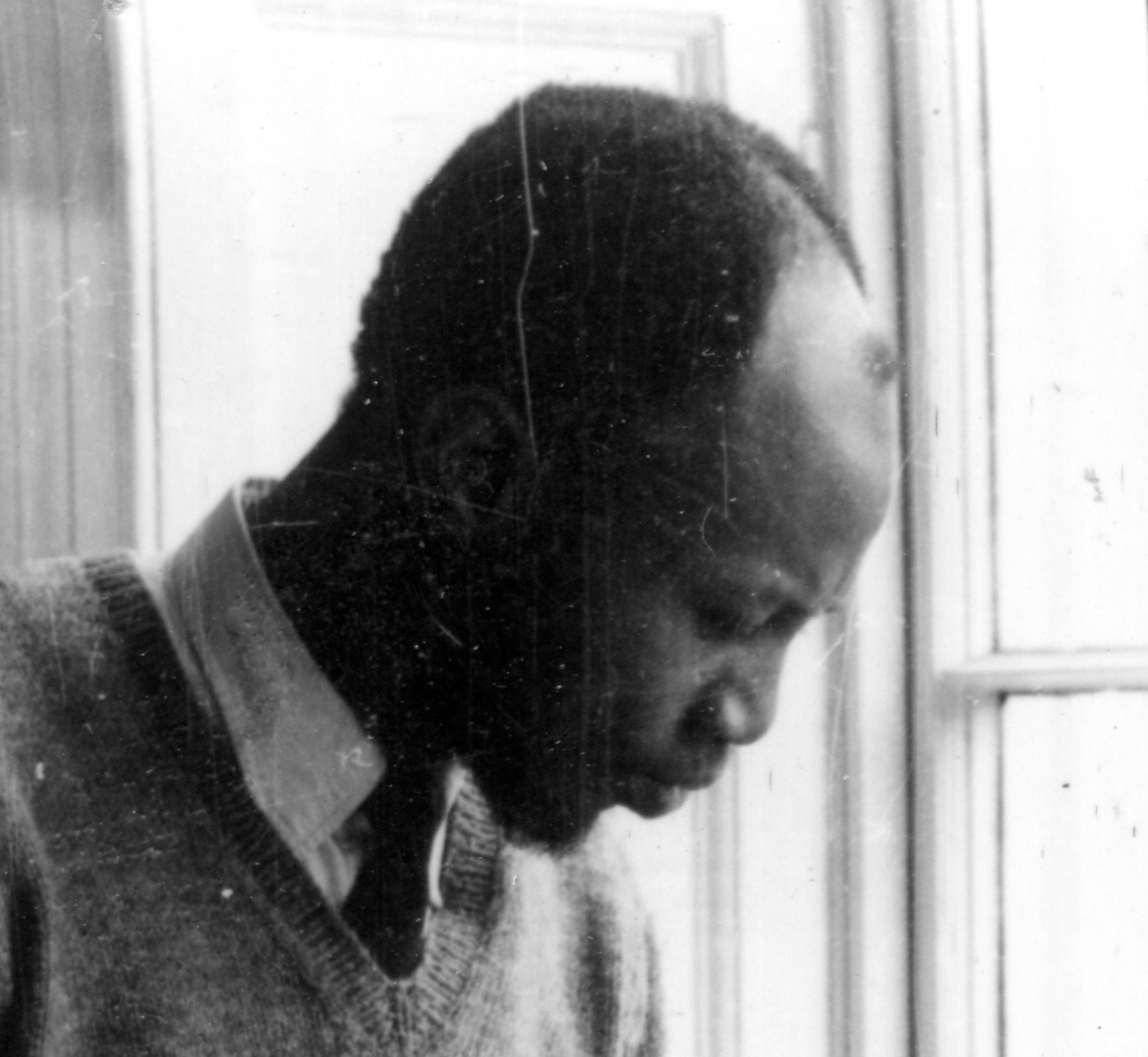
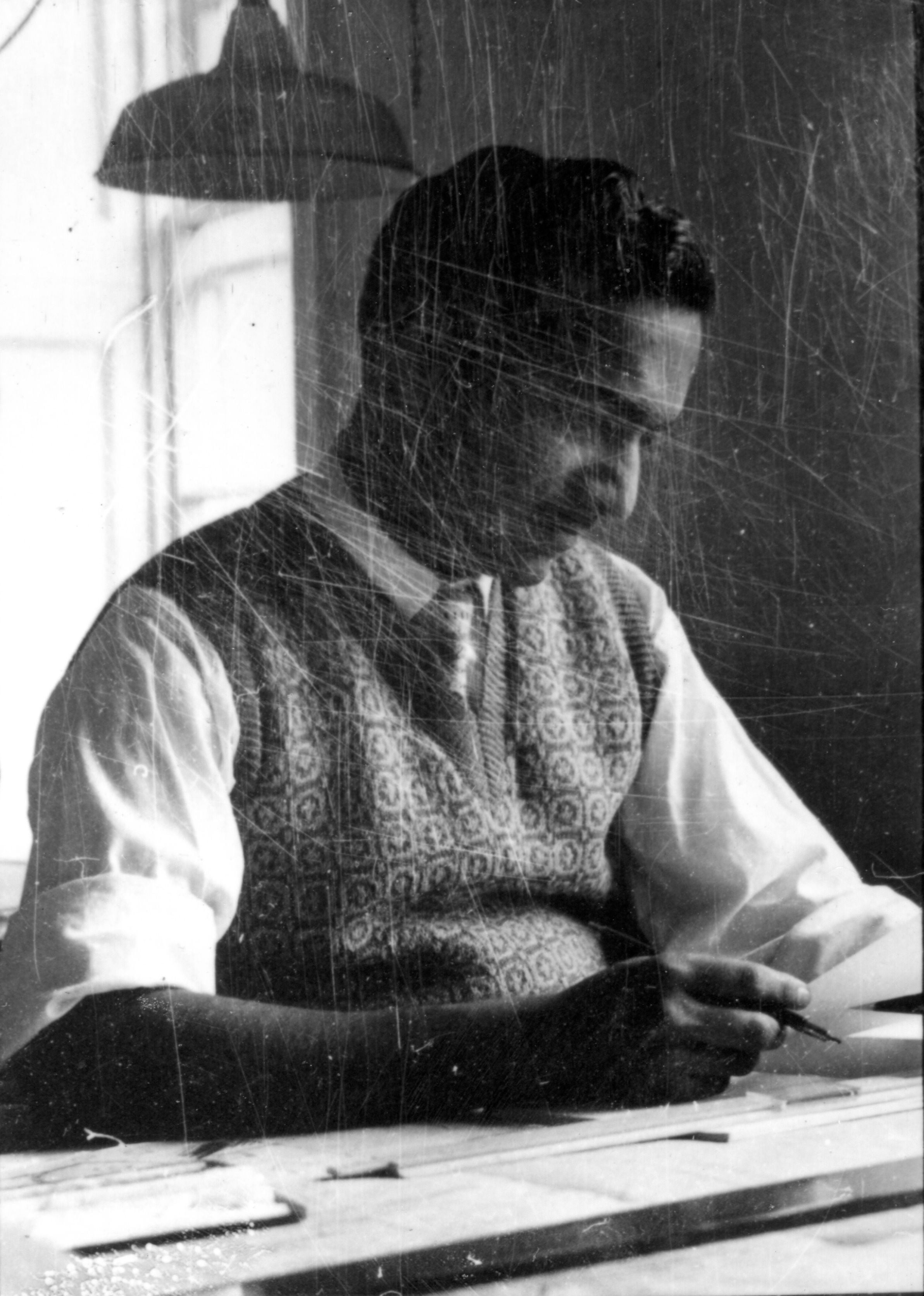
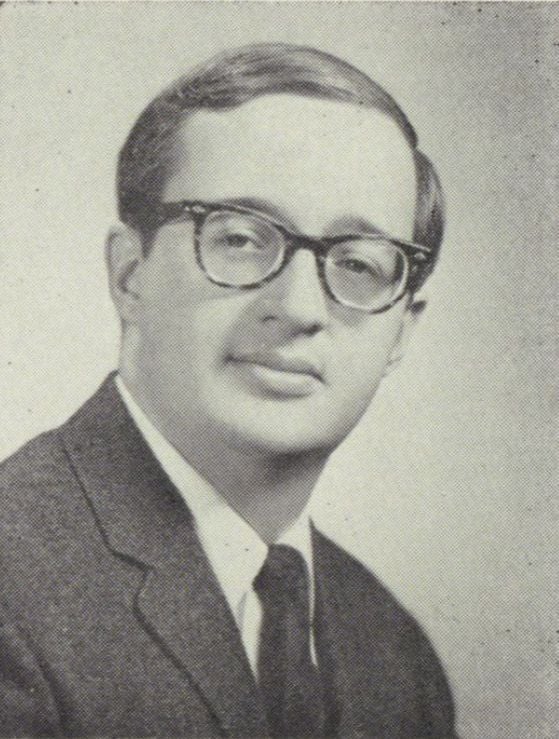
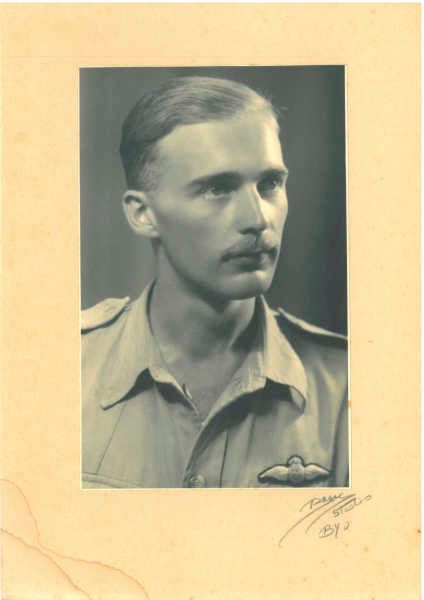
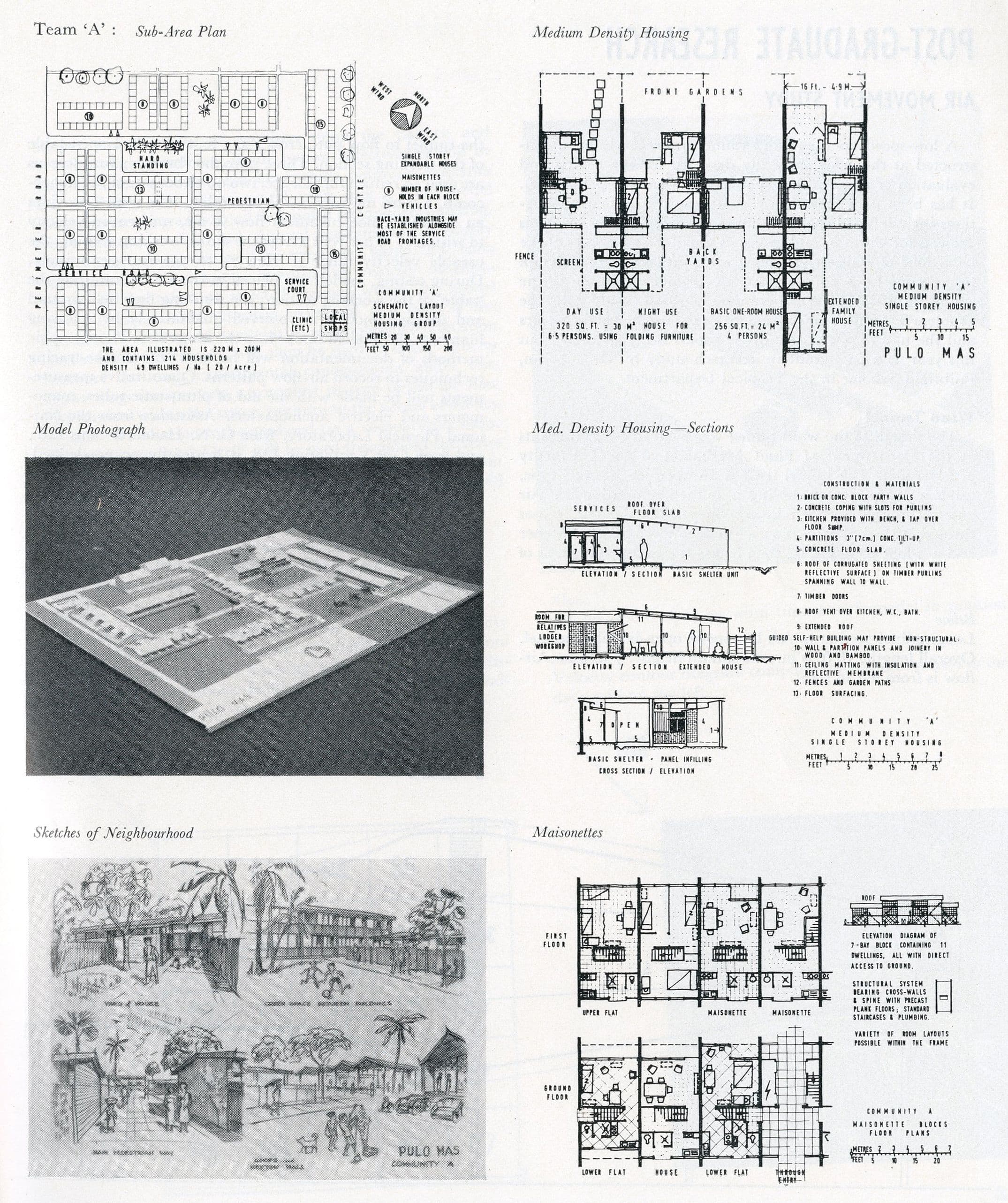
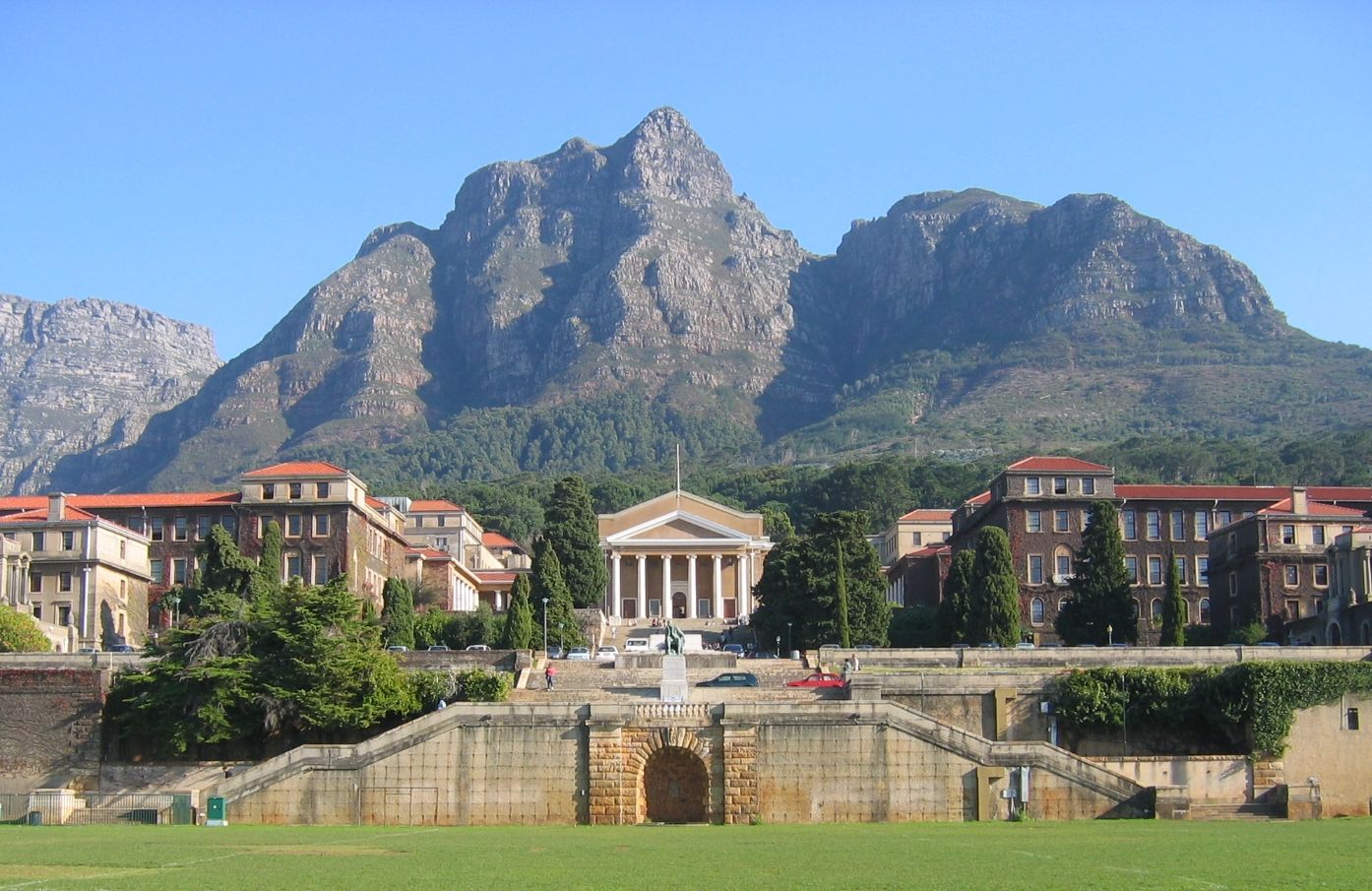
John English was born in the UK, in Ledbury, Herefordshire, in 1922, and was educated at Stowe School, Buckinghamshire. He left school at aged 15, in order to work on his father’s farm near Bulawayo, in Southern Rhodesia (Zimbabwe). By 1937 he was studying as a draughtsman and quantity surveyor with Rhodesian Railways, before enrolling as a student at the University of Cape Town, South Africa. In 1940 joined the Royal Air Force, as part of the Empire Training Scheme, in Southern Rhodesia, serving as a pilot, flying Dakota aircraft for Transport Command, ranging as afar afield as India, South Africa and the Shetland Islands. At the end of the war, John returned to the University of Cape Town, graduating and qualifying as an Associate of the RIBA in 1949. He appears to have subsequently practiced as an architect in Gweru, Bulawayo, Lusaka and Salisbury (now Harare). From September 1962, English enrolled on the postgraduate course run by the Architectural Association’s Department of Tropical Architecture, in London. English recalls that ‘after the break-up of Federation [Federation of Rhodesia and Nyasaland] there was so little confidence in the future that building stopped’ and that he decided to join the Departure of Agriculture, where he became involved in the engineering aspect of mealie (maize) control. Some time in the early 1960s, John moved to Johannesberg, South Africa and then, shortly afterwards, to Grahamstown (now Makhanda). Whilst there, he co-founded ‘English & Hoskin Architects in Association’, their practice's headed notepaper indicating that they offered architectural and restoration consultancy services. It appears that amongst his work were various alterations to the cathedral of St. Michael and St. George, including the restoration of the cathedral’s bells and bell frame in the 1990s – English being a keen bell-ringer himself. In addition to his architectural work, English also wrote and illustrated three children's books.
Sources
- Architectural Association Council Minutes, 13th February, 1963. AA Archives
- Architectural Association Journal, April 1963, pp.302-309
- Lewis, C. O. ‘Obituary: John Mayne English, 1922-2013.’ The Ringing World: the weekly Journal for Church Bell Ringers since 1911. No.5330, June 21, 2013, p640.
- Border History Society: ‘English, John Mayne…’. Artefacts.co.za website, accessed 7th July, 2025: https://artefacts.co.za/main/Buildings/archframes_mob.php?archid=6151#:~:text=John%20was%20a%20gifted%20artist,graphic%20pen%20and%20ink%20sketches.