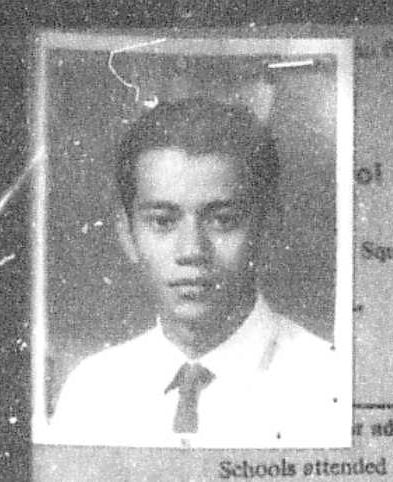
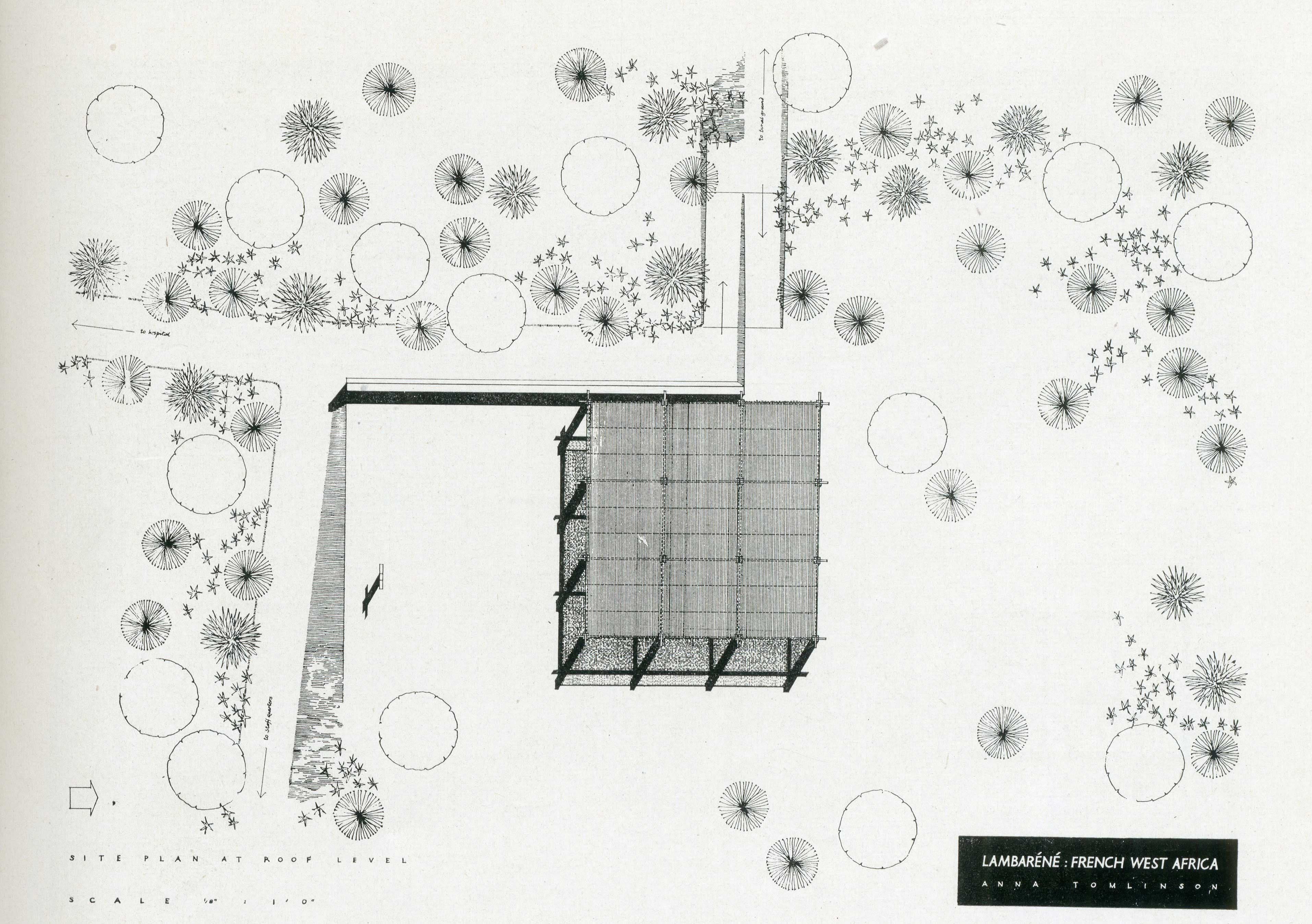
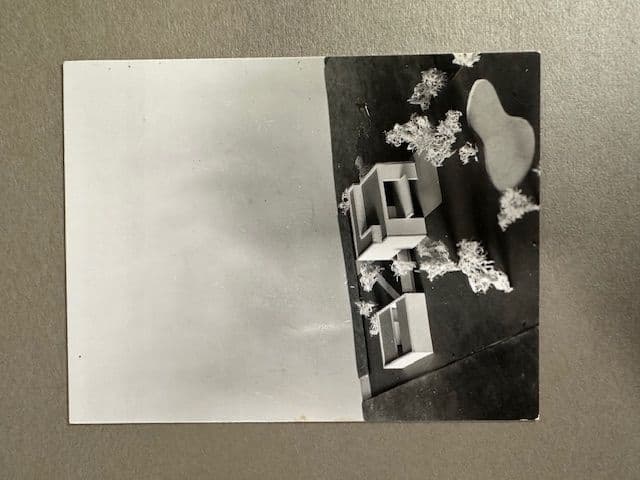
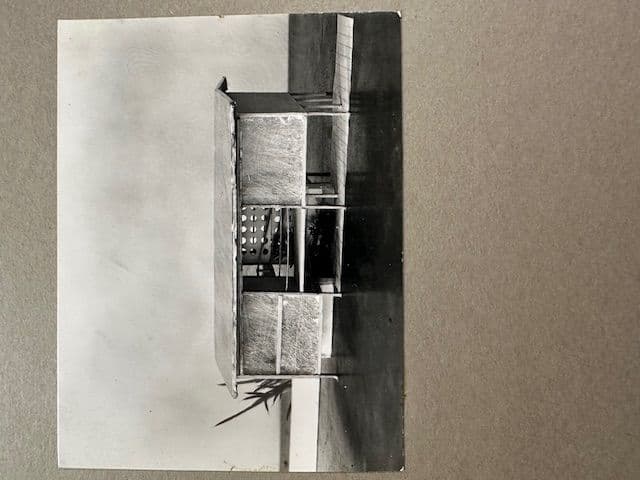
Anna Tomlinson was born in Cambridgeshire, in 1932 - her mother, Margaret Tomlinson (1905-1997), being an architect and photographer for the National Buildings Record. Anna attended Sherbourne School for Girls, followed by a foundation course at Exeter School of Art, before enrolling in the First Year at the Architectural Association, London, in 1950. As part of her final year’s studies, in 1954-1955, she joined the first cohort of the newly formed AA Department of Tropical Architecture. Immediately after completing her AA course, Tomlinson married fellow AA graduate, Patrick Hodgkinson and took up a position at the practice of Chamberlin, Powell and Bonn, working on the Barbican Centre, where she was given design responsibility for kitchens and bathrooms. After the birth of two sons, Anna began work as a researcher at the newly formed Centre for Land Use and Built Form Studies (now Martin Centre for Architectural and Urban Studies) in 1966. There she was to meet her second husband, Peter Dickens, whom she married in 1969. By the mid-1970s Anna had joined the faculty of the architecture department at Brighton Polytechnic, where she also undertook a PhD, researching into the architecture of British workhouses following the Poor Law of 1834. Her article for Architectural Review ‘The Architect and the workhouse’, published in December 1976, was a pioneering study in this field. Her research and scholarship, over the subsequent years, led to a reappraisal of workhouses as architectural heritage and a deeper appreciation of their importance for social history.
Sources
- Architectural Association Student Register 1945-1972, AA Archives
- Architectural Association Diploma Roll Book, 1924-1963, AA Archives
- Department of Tropical Architecture, student listing, Otto Koenigsberger Collection, Box OK27, AA Archives
- General Register Office, UK. England & Wales, Civil Registration Birth Index, 1916-2007. Reference: Volume 3b, Page 618
- General Register Office; UK; England & Wales, Civil Registration Marriage Index, 1916-2005. Volume: 4a; Page: 433
- Dickens, A. Architects and the union workhouse of the new Poor Law. Thesis (PhD), Brighton Polytechnic, 1982
- Dickens, A. ‘The Architect and the workhouse’, Architectural Review, vol. 160, no. 958, 1976 Dec., p. 345-352.
- Tristram Hodgkinson, ‘Obituaries: Anna Dickens’, The Guardian, October 4th, 2007. Accessed 30th December, 2024. https://www.theguardian.com/news/2007/oct/04/guardianobituaries.obituaries1
- Tristram Hodgkinson. Personal communication, 9th December, 2024.