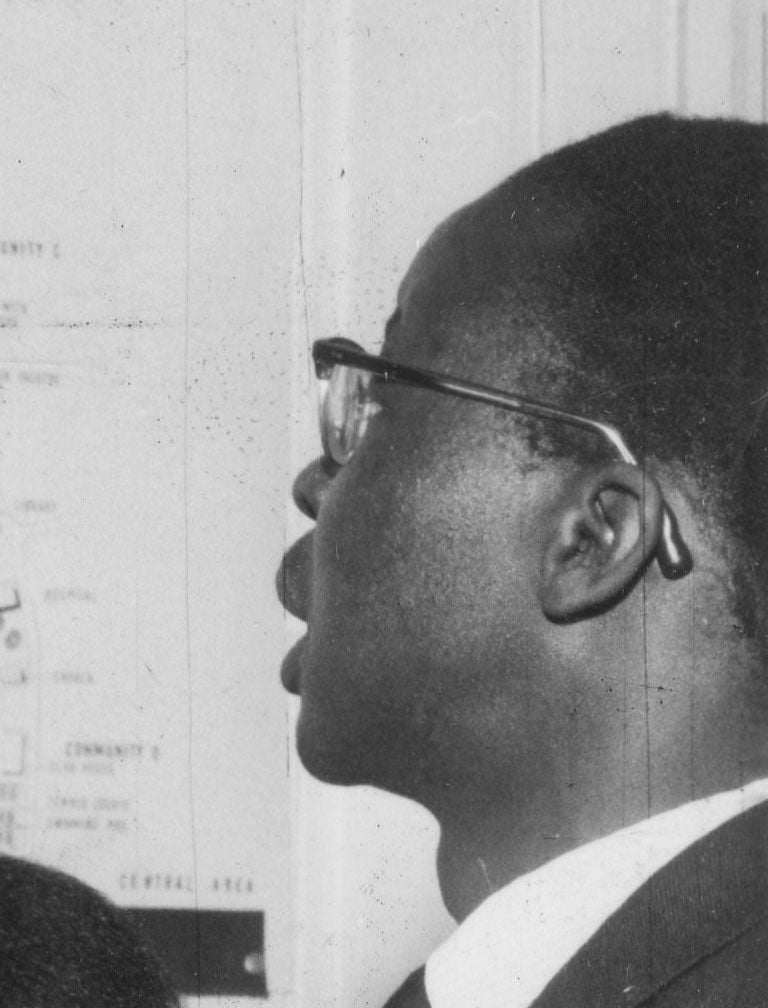
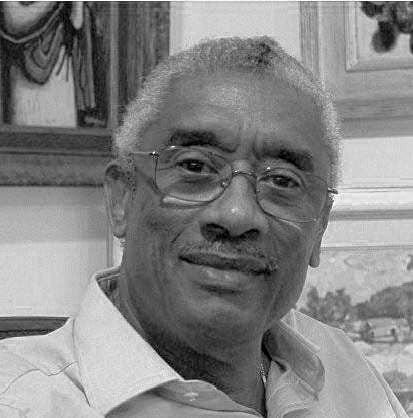
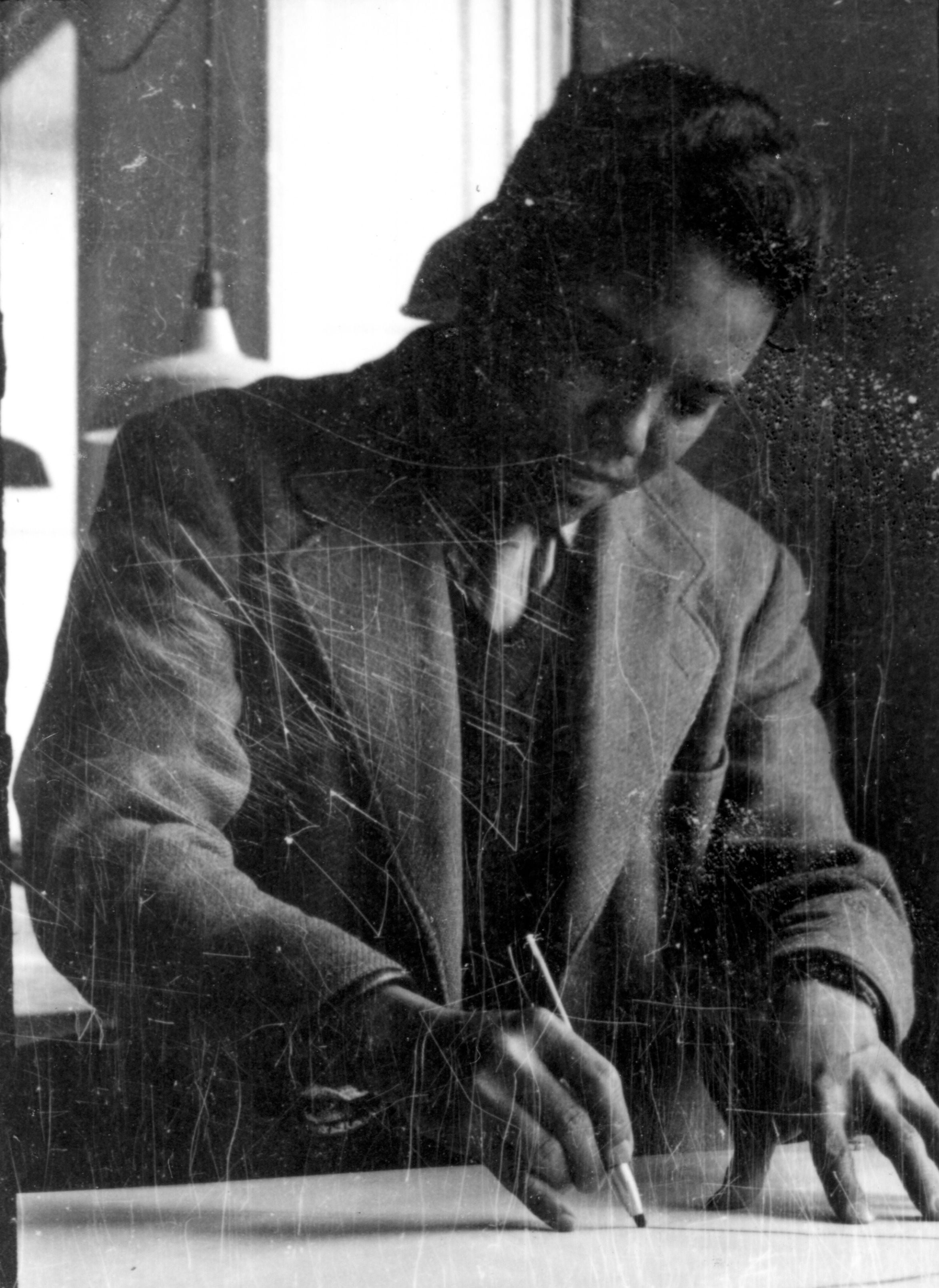
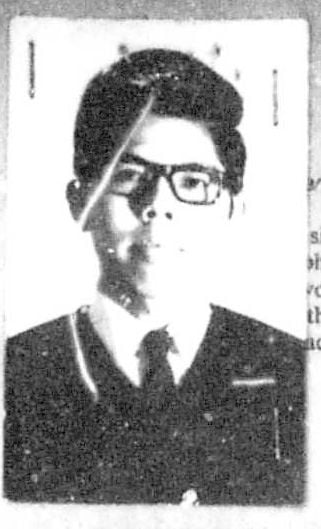
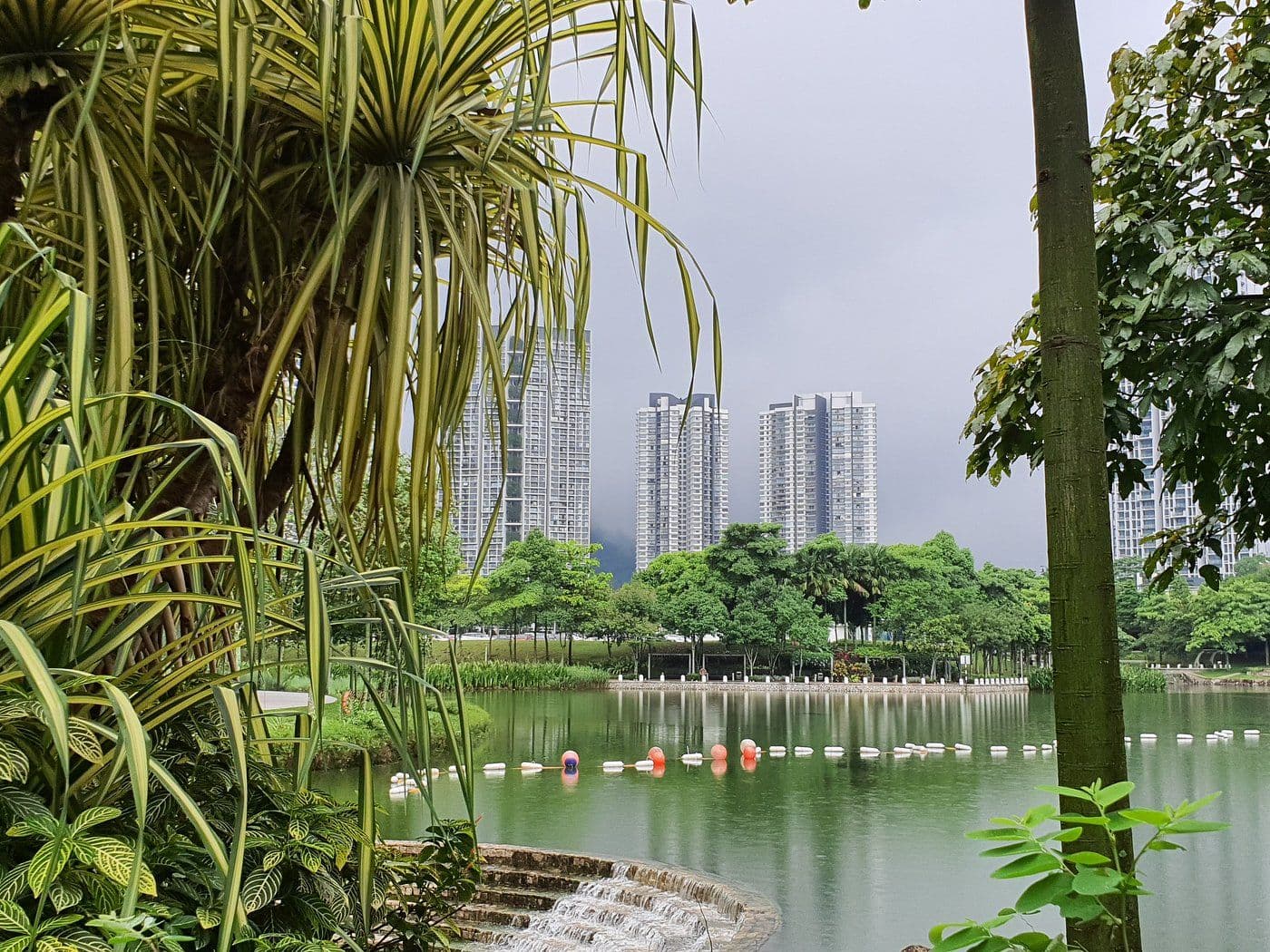
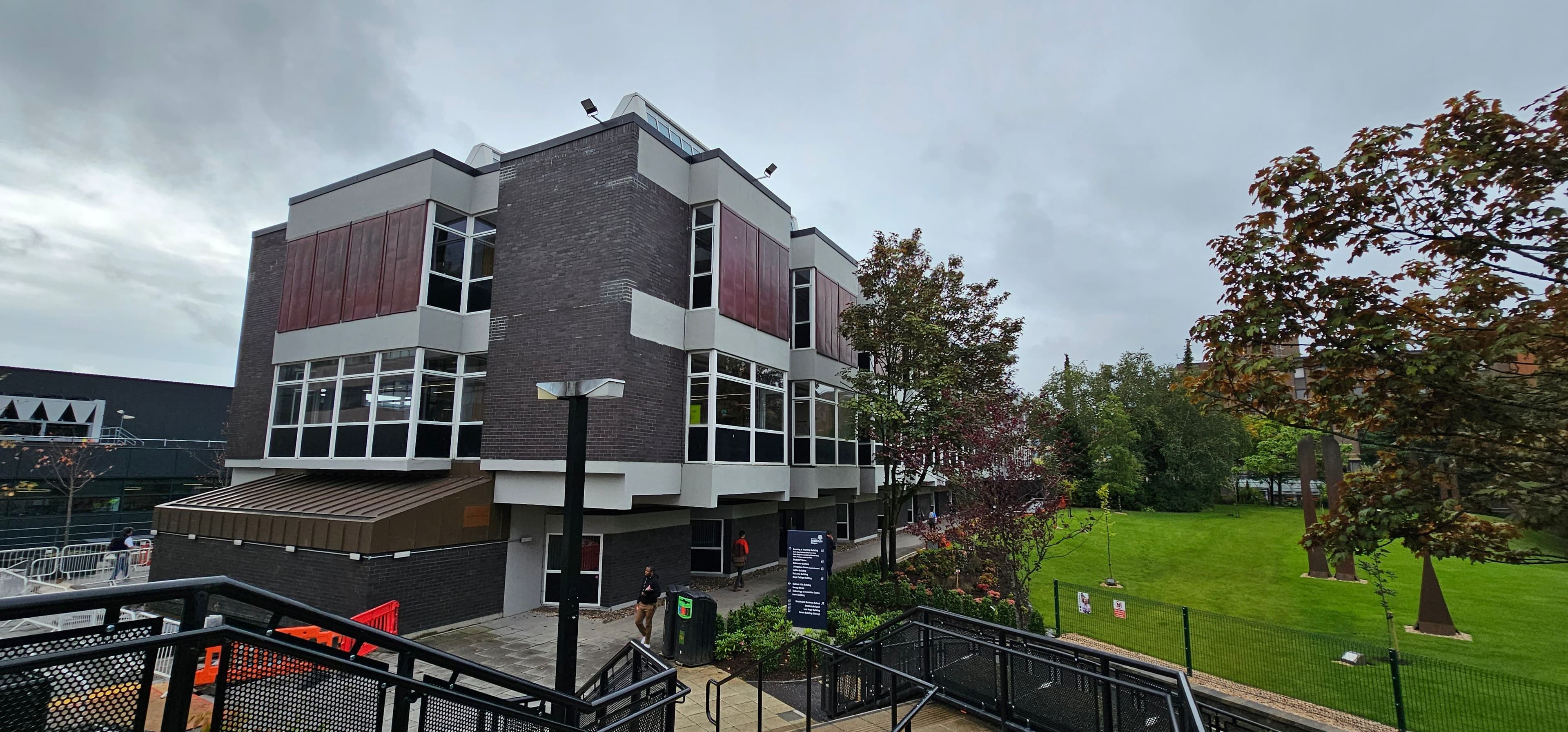
Wai Ping Ho was born in 1943. He was educated in Anderson Secondary School, Ipoh, Malaysia (1955-63) before moving to the UK in 1964 and joining the Department of Architecture at the Southend College of Technology in Essex (1964-67). However, after completing three years of study, that School of Architecture appears to have closed down, with students having to transfer and complete their studies elsewhere. Beginning in the summer of 1967 and over the following year, he first trained at Harrison and Stevens, Edinburgh and then at the London Borough of Hillingdon’s Architects’ Department. In the Autumn of 1968, he then eventually transferred to the AA as a fourth-year student to complete his architectural education, supported by a government of Malaysia scholarship. In his fifth and final year at the AA, he joined the Department of Development and Tropical Studies course, earning its certificate along with an AA Diploma in 1970. Immediately after graduating, Ho joined a post-graduate course at the Department of Urban Planning, University of Strathclyde, Glasgow. A few years later, around 1972, he returned to Malaysia and joined the Planning Department at Selangor. In 1979, he joined Booty, Edwards & Partners (now BEP Akitek), one of the leading architectural firms in Malaysia, where he headed the town planning department. In 1982, he was made director of architecture and town planning. Under his leadership, BEP was involved in the conceptual master planning of Putrajaya (1995), the Malaysian government’s administrative center based on the garden city concept, integrating a 400 hectare man-made lake, seeking to celebrate nature and preserve green open space, and a project of national significance. Although he worked on the planning of many large-scale developments, he is perhaps most celebrated for his work on the masterplan of the Desa ParkCity (c.2001), Kuala Lumpur, a 440-acre strata landed development including 22 neighborhoods, with low-rise and high-rise residential, commercial and recreational areas, and a range of amenities. Because of its appealing landscaping and its attention to the sociological and economic needs of its users, the development appears to be desirable and has won a range awards in the local real estate scene. Ho spent the remainder of his career in BEP until he retired in 2019. In 2021, he passed away at the age of 77, leaving behind his wife, two daughters, and two grandchildren. He is particularly remembered by his mentees and collaborators for his beautiful freehand sketches and his gentle, soft-spoken demeanor.
Sources
- Architectural Association Student Register, 1945‐1972, AA Archives
- Architectural Association Student Records Microfiche Files, 1968-1972, AA Archives
- Architectural Association Diploma Roll Book, 1964‐1975, AA Archives
- BEP Akitek Social Media Eulogy of Wai Ping Ho, https://www.instagram.com/p/CPpiz7RnVKR/ accessed 18 April 18, 2025
- About Page, BEP Akitek Sdn Bhd Architects Planners & Project Managers
https://www.bepakitek.com/about, accessed 18 April 2025 - UK parliament, House of Commons, Southend School Of Architecture (Closure), Hansard Volume 729: Tuesday 24 May 1966
- BEP 100 by BEP AKITEK (2021), ISBN : 978-983-40803-6-5, Published by: Adaptus Design System Sdn Bhd, Editors: Yvonne Leong, Authors: Liyana Hasnan, Robert Powell, Simon Soon [WOULD BE BRILLIANT TO ACCESS AND INCLUDE]